
 Iran Chronicle
Before Cyrus - Part 0: Bronze, Iron, and the Forgotten Civilisations of the Iranian Plateau
Mobina ghanbaryan
Centuries before the rise of the Medes and the Achaemenid Empire, the Iranian plateau was home to dynamic, interconnected urban civilizations. From the mineral-rich valleys of the Bronze Age to the turbulent cultural migrations of the Iron Age, ancient Iran formed a sophisticated bridge between the Near East and Central Asia.
Beyond the Mesopotamian Shadow
In popular historical imagination, the history of ancient Iran begins abruptly in the sixth century BCE with Cyrus the Great. In this traditional telling, the Iranian plateau is often cast as a rugged, sparsely populated highland wilderness that only entered world history once Persian armies descended into the river valleys of Mesopotamia. Archaeology reveals a fundamentally different reality. For more than two millennia prior to Cyrus, the Iranian plateau was occupied by flourishing urban cultures, trade emporia, and powerful dynastic states. Rather than existing on the passive periphery of Sumer, Akkad, and Babylon, the peoples of the plateau were essential partners in the trade networks of the ancient Near East, supplying the raw materials such as copper, tin, gold, lapis lazuli, chlorite, and timber, that fuelled early urbanisation from the Mediterranean to the Indus Valley. Understanding ancient Iran before the Persians requires exploring what archaeologists mean by the Bronze Age and Iron Age within the specific geography of the Iranian plateau.
CHRONOLOGICAL OVERVIEW OF PRE-PERSIAN IRAN:
Archaeological Period | Approximate Dates | Key Civilizations, Kingdoms, and Cultural Horizons | Defining Characteristics and Archaeological Markers |
|---|---|---|---|
Early Bronze Age | c. 3300 – 2000 BCE | - Proto-Elamite horizon (Susa, Anshan) | Earliest administrative clay tablets, emergence of urban craft specialization, chlorite vessel carving, and long-distance trade corridors linking Mesopotamia to the Indus Valley |
Middle Bronze Age | c. 2000 – 1500 BCE | - Shimashki Dynasty | Regional Elamite confederacies, diplomatic treaties and military clashes with Ur III and Old Babylonian states, and monumental rock reliefs (e.g., King Anubanini) |
Late Bronze Age | c. 1500 – 1200 BCE | - Middle Elamite Empire (Susa, Dur-Untash) | Construction of the monumental ziggurat at Chogha Zanbil, large-scale bronze casting, and extensive dynastic interaction with Kassite Babylonia |
Iron Age I & II | c. 1200 – 800 BCE | - Kingdom of Mannea (Hasanlu IVb) | Disappearance of painted pottery in favor of wheel-turnedBurnished Gray Ware, extramural cemeteries, cavalry innovations, and the influx of Indo-Iranian speakers |
Iron Age III | c. 800 – 550 BCE | - Kingdom of Urartu in NW Iran (Bastam) | Cyclopean stone fortress architecture, columned audience halls, and the political synthesis between native Elamites and incoming Persians culminating in Cyrus the Great . |
The Plateau Landscape: Basins, Oases, and Mountains
The cultural development of ancient Iran was shaped by its distinct physical geography. The Iranian plateau is a vast upland basin, ringed by formidable mountain barriers: the Zagros Mountains to the west and south, and the Alborz and Kopet Dag ranges to the north. At its arid centre lie two hyper-arid deserts, the Dasht-e Kavir (Great Salt Desert) and the Dasht-e Lut. Consequently, human settlement did not concentrate along single massive river corridors like the Nile in Egypt or the Tigris and Euphrates in Mesopotamia. Instead, early Iranian civilisation developed within fertile, well-watered alluvial pockets, intermontane valleys, and terminal river deltas situated along the base of the mountains. This landscape gave rise to a polycentric world: an archipelago of regional cultures separated by deserts and mountain passes, yet intimately linked by overland caravan routes.
What the "Bronze Age" Means in Iran (c. 3300–1200 BCE)
In Iranian archaeology, the Bronze Age designates the era of advanced metallurgy, specialised urban craft production, and interstate trade networks connecting the plateau with Mesopotamia, the Persian Gulf, Central Asia, and the Indus Valley, rather than a single unified empire, the Iranian Bronze Age comprised three major cultural spheres:
The Three Major Bronze Age Spheres of Iran
Cultural Sphere | Geographic Region | Principal Kingdoms, Sites, and Cultural Horizons | Key Cultural and Economic Characteristics |
|---|---|---|---|
South-Western Sphere | Khuzestan Plains & Fars Highlands | - Lowland Susa | - Core of the Elamite confederation linking lowlands and highlands |
South-Eastern Sphere | Kerman Oasis & Sistan Basin | - Jiroft Culture (Konar Sandal) | - Massive urban oasis networks and mudbrick platform complexes |
Northern & North-Eastern Sphere | Alborz Foothills & Kopet Dag Slopes | - Tepe Hissar (Damghan) | - Specialized pyro technology and large-scale copper/lead metallurgy |
The Southwestern Elamite Sphere
The lowlands of Susiana (Khuzestan) and the high valleys of Fars constituted the core of Elam. While Susa served as a cosmopolitan metropolis maintaining close ties with Mesopotamian writing and administration, the highland centres of Awan and Anshan(Tal-e Malyan) anchored indigenous Elamite political power. From the pictographic Proto-Elamite accounting tablets of the early third millennium BCE to the monumental ziggurat of Dur-Untash (Chogha Zanbil) built during the Middle Elamite period (c. 1300 BCE), Elam developed an unbroken tradition of sacred architecture, royal administration, and monumental art.
 |  |
|---|
The Southeastern Oasis Civilizations: Jiroft and Marhashi
In south-eastern Iran, along the Halil Rud river valley in Kerman Province, excavations at Konar Sandal revealed the monumental remains of the Jiroft Civilisation(flourishing c. 2800–2200 BCE). Equipped with massive stepped mudbrick platforms and sophisticated administrative centres, Jiroft became celebrated for its distinctive intercultural style chlorite vessels.Carved from soft greenish-grey stone, these containers were decorated with intricate low-relief imagery of leopards, humped bulls, serpents, scorpion-men, and architectural facades, and were exported across the ancient world from Mesopotamia to the Persian Gulf. Further east, in the Sistan basin, the great urban centre of Shahr-e Sukhteh("The Burnt City") spanned over 150 hectares, serving as a primary manufacturing hub for working lapis lazuli imported from the Badakhshan mines of Afghanistan before shipping it westward.
The Northern Foothills and Steppe Connections
Along the northern edge of the central desert, sites like Tepe Hissar(near Damghan) and Tureng tepe developed specialized copper and lead smelting workshops, linking the mineral wealth of the Alborz mountains with the Bactria-Margiana Archaeological Complex (BMAC) of Bronze Age Central Asia.
The "Iron Age Transition" and the Iranian Migrations (c. 1400–600 BCE)
Around the end of the second millennium BCE, the long-distance trade networks of the Bronze Age experienced widespread disruption, coinciding with the broader Late Bronze Age collapse across the eastern Mediterranean and the Near East. In Iranian archaeology, the transition to the Iron Age is defined not merely by the gradual adoption of smelted iron for weapons and tools, but primarily by sweeping ceramic, architectural, and demographic transformations:
Key Archaeological Markers of the Iranian Iron Age (c. 1400–550 BCE)
Diagnostic Domain | Primary Archaeological Horizon & Evidence | Cultural and Historical Significance |
|---|---|---|
Ceramics | - Sudden disappearance of painted Bronze Age pottery | Represents a sharp technological and stylistic break across northern, central, and western Iran, widely tracked by archaeologists as a primary horizon marker for the Iron Age transition (Iron I–III). |
Burial Customs | - Abandonment of burials beneath house floors inside settlements | Marks a fundamental shift in religious, mortuary, and ancestor-veneration practices, highlighting growing social stratification and changing community organisation. |
Technology & Warfare | - Early development of cast bronze horse bits, cheekpieces, and harness fittings (culminating in theLuristan Bronzes) | Reflects the rise of specialised equestrian warfare, mounted cavalry, and elite warrior aristocracies across the Zagros mountain valleys . |
Demographics & Language | - Progressive pastoralist settlement across northern and central valleys | Traces the gradual, multi-century migration of the linguistic ancestors of the Medes and Persians onto the plateau, creating the cultural and architectural foundations of later imperial Iran. |
The Arrival of the Iranians
Linguistically and archaeologically, the early Iron Age (Iron I and II, c. 1400–800 BCE) marks the gradual, multi-stage migration of Indo-Iranian-speaking peoples onto the plateau from Central Asia. Rather than a sudden, destructive military conquest, this migration was a multi-century process of pastoralist infiltration, settlement, and cultural synthesis. As these groups moved into northern, central, and western Iran, they introduced new ceramic traditions, distinctive equestrian gear, and fortified elite residences characterized by columned audience halls architectural prototypes that would later inspire Median and Achaemenid royal palaces.
The Iron Age Pre-Persian Frontier
 |  |
|---|
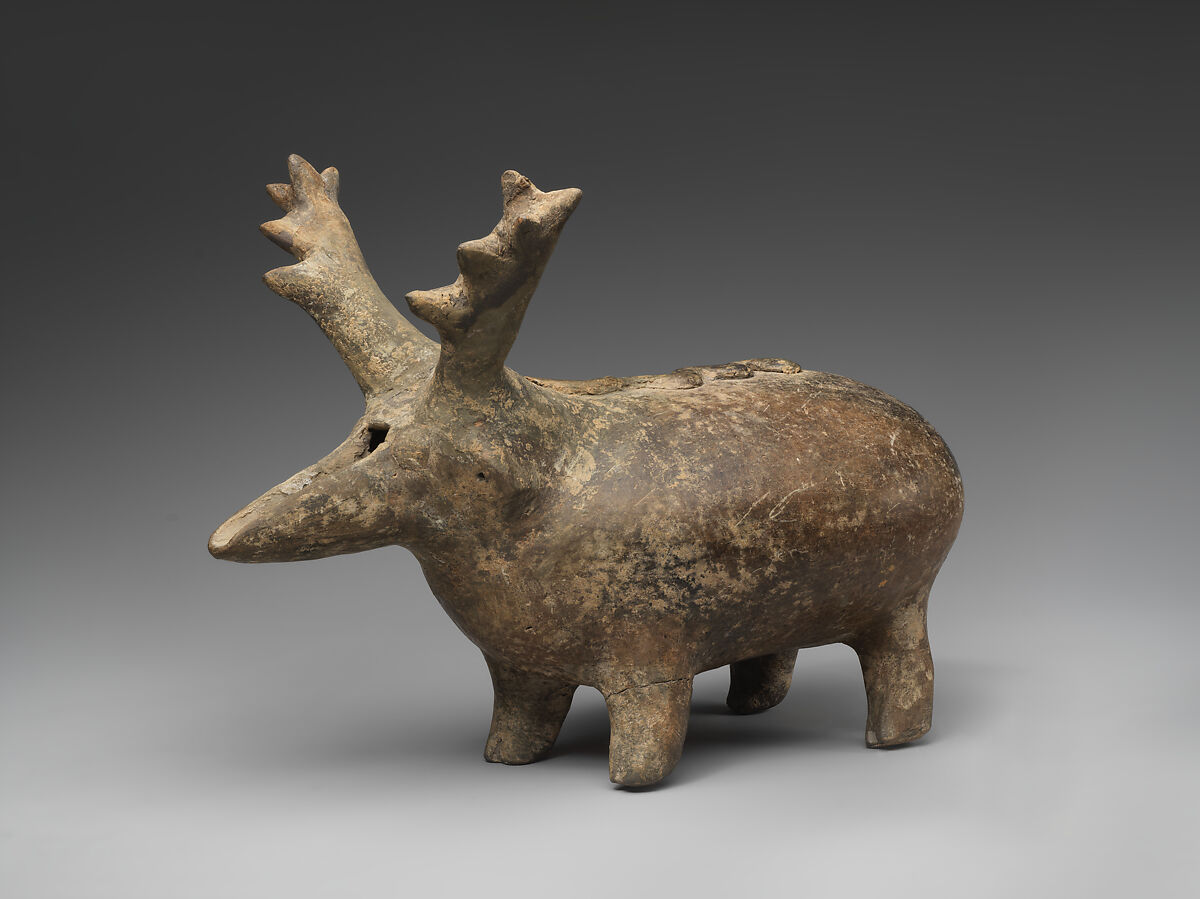
During the centuries preceding the Persian Empire (Iron II and III, c. 1000–550 BCE), the western Zagros and northern plateau became a fiercely contested frontier between powerful native kingdoms and the imperial armies of the Neo-Assyrian Empire:
The Kingdom of Mannea (c. 900–600 BCE): Located south of Lake Urmia, Mannea flourished as an independent, non-Indo-European kingdom. The fortified citadel of Hasanlu(Period IVb) preserves extraordinary evidence of this era: a catastrophic destruction layer that sealed a multi-story mudbrick palace complex, containing ivory inlays, iron weapons, and the famous solid-gold Golden Bowl of Hasanlu.
Urartu in Northwest Iran: The Hurro-Urartian kingdom cantered around Lake Van expanded eastward into Iranian Azerbaijan, constructing massive stone fortresses such as Bastam to control northern mountain routes.
The Zagros Metalworkers: In the central Zagros valleys of Lorestan, indigenous metalworkers created the famous cast Luristan Bronze, intricate horse cheekpieces, standard finials depicting the "Master of Animals," and ceremonial axe heads, showcasing a unique highland visual tradition.
The Medes and the Persian Synthesis: In north-western Iran, Median tribes gradually coalesced around Ecbatana (Hamadan), eventually allying with Babylon to overthrow the Neo-Assyrian Empire in 612 BCE. Meanwhile, in the south, incoming Persian clans settled in the ancient territory of Anshan, intermarrying with the native Elamite population.
The Tapestry of Ancient Iran
When Cyrus the Great unified the Medes and Persians and founded the Achaemenid Empire in 550 BCE, he was not creating civilization on an empty plateau. He inherited a deep, millennia-old legacy: the administrative expertise and scribal traditions of the Elemite, the monumental stonework and fortress architecture of Urartu and the Medes,the exquisite metallurgical mastery of Lorestan, and the ancient overland trade routes first forged by the oasis cities of Jiroft and Shahr-e SukhteJiroftandShahr-e Sukhte.
The rise of ancient Persia was the culmination, not the beginning of Iran's ancient cultural journey.
Sources & Further Reading
- Danti, Michael D. (2013) · The Iranian Plateau and Settlement in the Iron Age In Daniel T. Potts (ed.), The Oxford Handbook of Ancient Iran, pp. 364–389. Oxford: Oxford University Press.
- Dyson, Robert H., Jr. (1989) · The Iron Age Architecture at Hasanlu: An Essay. Expedition Magazine, 31(2–3), pp. 107–127.
- Levine, Louis D. (1987) · The Iron Age In Frank Hole (ed.), The Archaeology of Western Iran: Settlement and Society from Prehistory to the Islamic Conquest pp. 229–250
- Majidzadeh, Yousef. (2003) · iroft: The Earliest Oriental Civilization
- Potts, Daniel T. (2016). · The Archaeology of Elam: Formation and Transformation of an Ancient Iranian State 2nd rev. ed. Cambridge: Cambridge University Press.
- Vidale, Massimo. (2015) · Searching for Mythological Themes on the 'Jiroft' Chlorite Artefacts. Iranica Antiqua 50, pp. 15–54.
Continue this collection
Before Cyrus — Article 1 of 5